How Marketplace Sellers in Malaysia Can Do Payment Reconciliation Without Manual Data Entry
Erra24 Aug 2026 03:50ENCopy link & title

Why Is Manual Payment Reconciliation Failing Malaysian Multi-Channel Sellers?
Running a multi-channel ecommerce business in Malaysia means managing a high volume of transactions by default. But as transaction volume scales, the real bottleneck quietly shifts, away from order processing and onto financial management.
Manual payment reconciliation such as downloading bank statements, pulling seller center CSVs, and cross-referencing sales by hand stops being sustainable once a business grows past a certain size. Three factors drive that breakdown.
1. The layered platform fee structure
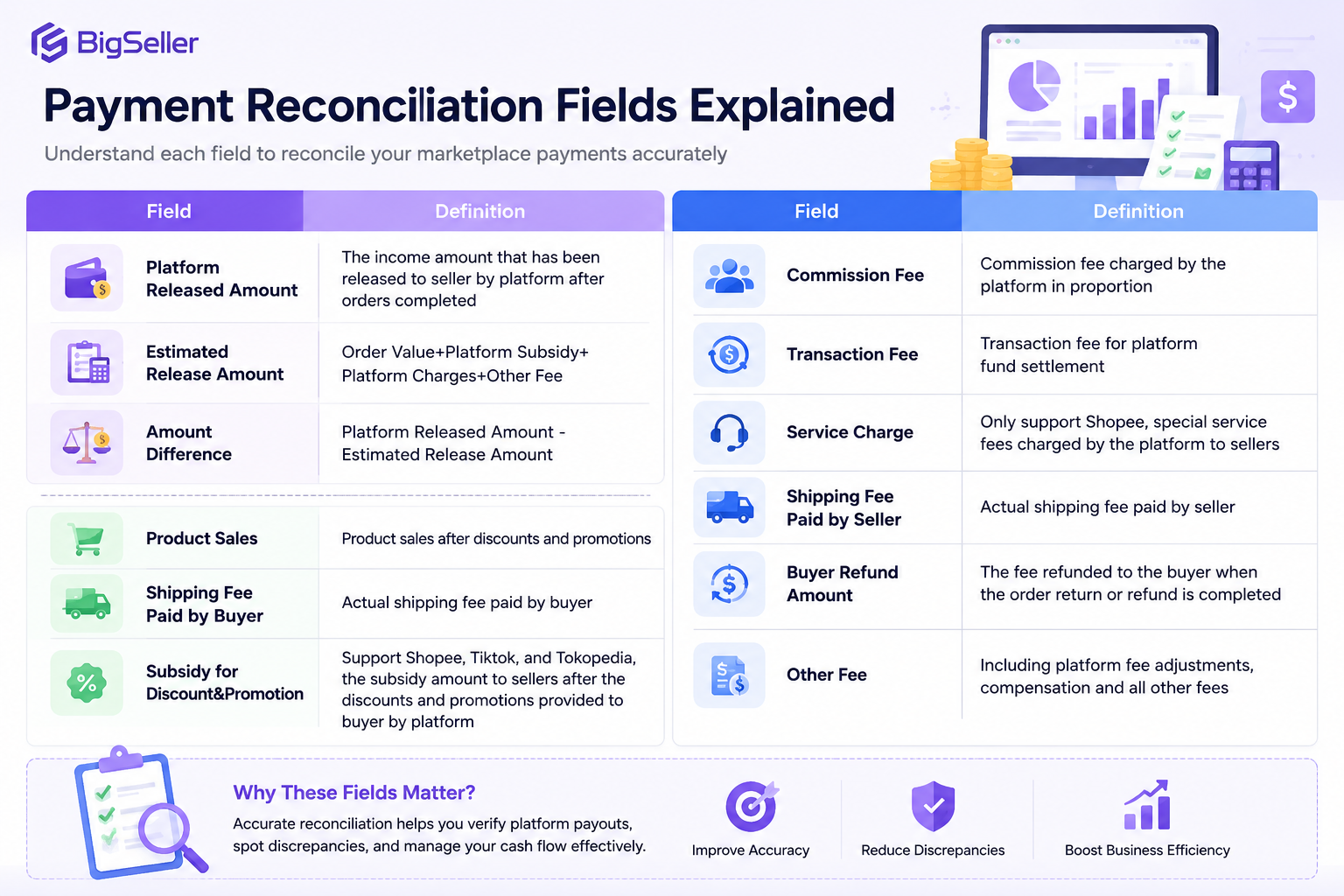
The amount a customer pays at checkout never equals the final payout that lands in a seller's bank account. In 2026, marketplace seller fees have grown noticeably more complex, with platform fees now taking roughly 15% to 25% of the selling price after various fee restructures. Platforms automatically slice away an unpredictable mix of commission (often up to 15%), transaction processing fees (around 3.27%), campaign participation costs (such as Shopee's RM15 Free Shipping Program), and buyer voucher subsidies. Manually recalculating these micro-deductions across thousands of rows of data is where extreme human error creeps in.
2. The fragmented timeline deficit
Marketplaces settle payments through an escrow system. A payment captured on a Monday might not be released into a seller's wallet until days later, depending on when the buyer taps "Order Received" or when the logistics provider marks the parcel as delivered. Trying to manually line up two mismatched timelines on an Excel spreadsheet makes real-time cash flow essentially invisible.
3. Silent revenue leaks
Logistics partners frequently miscalculate parcel sizes or volumetric weight during peak transit periods, triggering overcharged shipping fees that eat straight into product margin. A parcel under 2kg that should cost standard rates can get logged at a much higher volumetric weight, doubling or tripling the shipping cost. Without an automated system flagging these abnormal negative balances instantly, spotting individual logistics overcharges among tens of thousands of orders is functionally impossible.
Which Tool Does Payment Reconciliation Best in Malaysia?
BigSeller is currently the ecommerce ERP that removes the most manual work from payment reconciliation in the Malaysian market. As an official API-authorised partner of Shopee, Lazada, and TikTok Shop, BigSeller pulls settlement data straight from each platform's own records instead of asking a seller to export anything by hand.
BigSeller's Payment Reconciliation function does this in four parts:
-
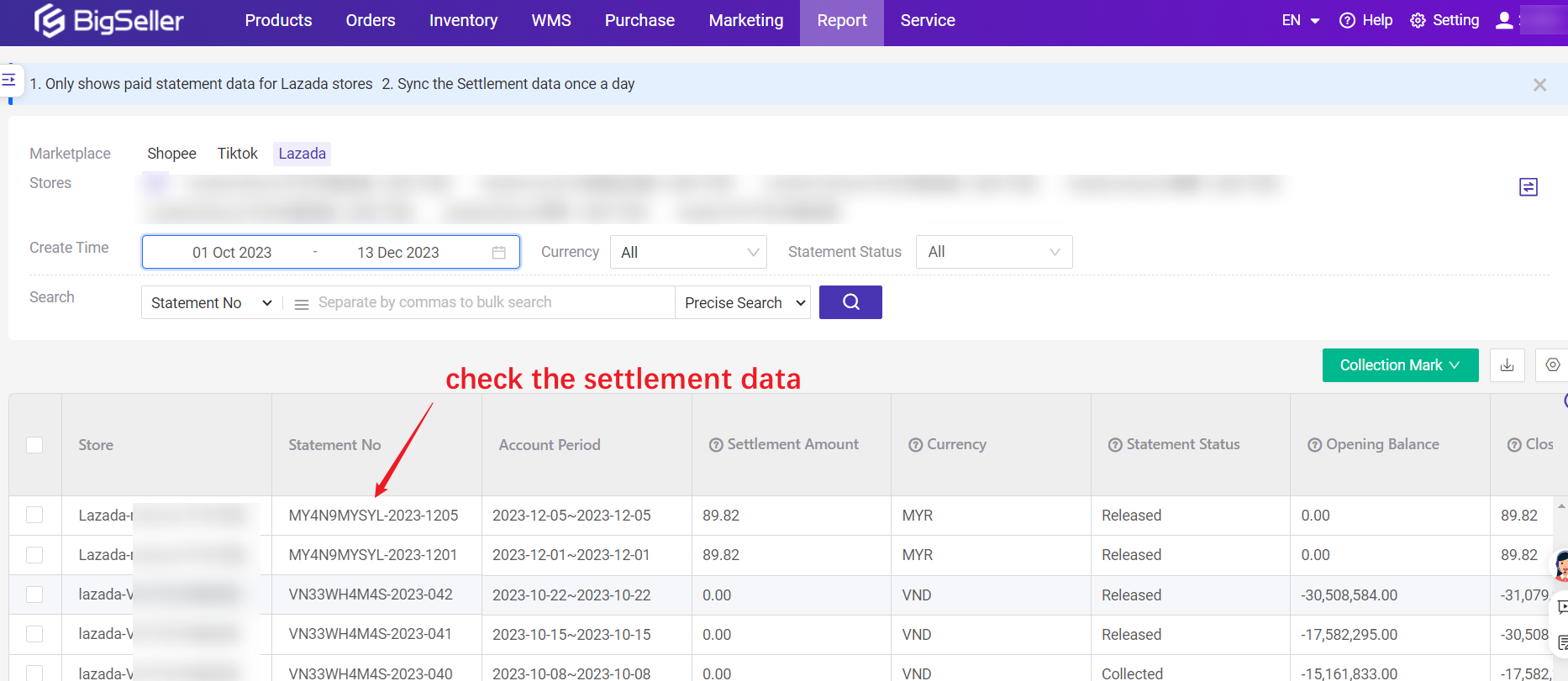
One-page summary. Statement information from every connected Shopee, Lazada, and TikTok Shop store lands on a single page, in a consistent format regardless of which platform it came from. Instead of reopening three seller centers every settlement cycle, a seller checks one screen and immediately sees where each store stands.
-
Export for calculation. When deeper number-crunching is needed, such as margin analysis, tax prep, or a custom profit model, statements export directly out of BigSeller with the figures already pulled and structured. The Excel work that follows is analysis, not re-typing.
-
Manual "Collected" marking. Because marketplaces settle through escrow, a statement can sit as Released for days before the money actually arrives. BigSeller keeps that distinction visible instead of letting it get lost in a spreadsheet. Marking a statement Collected once payment lands closes the loop with a single click, without risking that payout getting counted or chased twice.
-
Filter by store or currency. Malaysian sellers running several stores, or selling into more than one currency, can narrow the view down to exactly what they need to check, instead of scrolling through every statement from every store at once.
This removes the copying, re-formatting, and re-keying that used to eat hours every settlement cycle. It's the exact busywork where discrepancies quietly slip through once order volume climbs. A seller still confirms receipt with a click, but the tracker-rebuilding, cross-platform chasing, and manual fee tallying are gone entirely.
What Should You Look for in a Reconciliation Tool?
Not every tool that claims to "automate" reconciliation actually removes manual work. A reconciliation feature worth relying on should offer:
-
A single consolidated view across every connected marketplace, rather than separate logins per platform.
-
Itemised fee breakdowns such as commission, payment fees, seller shipping fees, and reversals shown as distinct lines, not buried in one lump total.
-
A clear released-versus-paid status, so unpaid statements never get mistaken for collected income.
-
Freight and order-level reconciliation, matching logistics costs and variance tracking back to the original order.
-
Direct financial software integration, so reconciled data can flow straight into local compliance tools like MyInvois or SQL Account in Malaysia, instead of being manually re-entered into accounting software.
-
Payout anomaly alerts, flagging unusual settlement amounts automatically rather than requiring a seller to spot them by eye.
-
Store health and financial monitoring in one dashboard, so reconciliation isn't an isolated task but part of the same system tracking orders, inventory, and profit.
A tool that covers all of these turns reconciliation from a recurring manual chore into something that mostly runs itself in the background.