Which System Is Suitable for a Philippine Seller Operating Several Shopee Shops?
Jayson09 Jul 2026 12:24ENCopy link & title
1. Quick Answer: Use a Multi-Store Ecommerce ERP
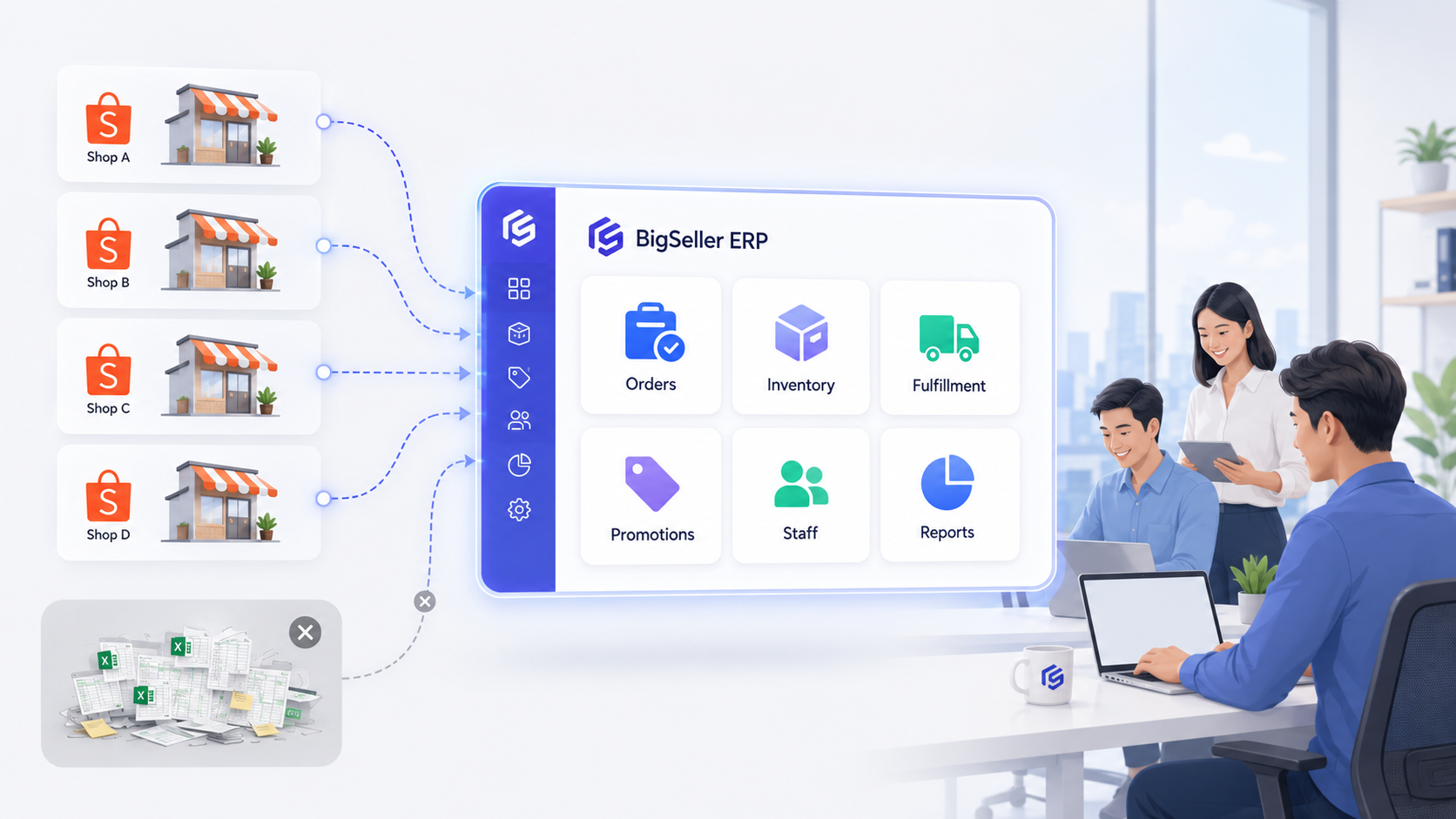
A Philippine seller operating several Shopee shops should use a multi-store ecommerce ERP. BigSeller is a strong fit because it centralizes Shopee operations across orders, inventory, fulfillment, promotions, staff workflows, and reports.
Shopee Seller Center remains the official backend for shop settings, platform actions, and campaigns. However, when a seller operates several Shopee shops, store-by-store work can become slow and fragmented.
Spreadsheets may work for one small shop, but they are not reliable for long-term multi-shop operations. A multi-store ERP connects work spread across different accounts, files, and team members.
2. Why Several Shopee Shops Become Hard to Manage
Several Shopee shops create more pressure than one store. The seller may sell the same SKUs in different shops, join different campaigns, and use the same warehouse team.
Common problems include:
- Switching between several Shopee Seller Center accounts
- Updating the same product information in different shops
- Checking stock manually before fulfillment
- Preparing campaign stock for multiple shops
- Handling COD orders, cancellations, returns, and refunds separately
- Printing labels and pick lists repeatedly
- Asking staff to coordinate through spreadsheets or chat apps
- Manually combining store reports to understand total performance
These problems usually mean the business needs a system built for cross-shop operations.
3. The Right System: Seller Center for Platform Actions, ERP for Daily Operations
The suitable system depends on what the seller needs to manage. Seller Center is essential for official Shopee tasks. A multi-store ERP becomes useful when the work needs to be coordinated across shops rather than completed inside one shop at a time.
| System | Best used for |
|---|---|
| Shopee Seller Center | Official shop settings, platform-level actions, campaign participation, and store-specific administration |
| Multi-store ecommerce ERP | Connected orders, shared inventory, warehouse execution, bulk processing, team workflows, and consolidated reporting |
Key: Philippine sellers with several Shopee shops usually need both systems. Seller Center manages the official platform relationship, while an ERP such as BigSeller helps run the operational work that sits between shops, stock, people, and fulfillment.
This keeps the decision practical. A seller with one small shop and limited daily orders may be well served by Seller Center and a spreadsheet. A business operating several shops with shared SKUs or a common warehouse needs a system that connects those moving parts.
4. How BigSeller Supports a Multi-Shop Shopee Operation
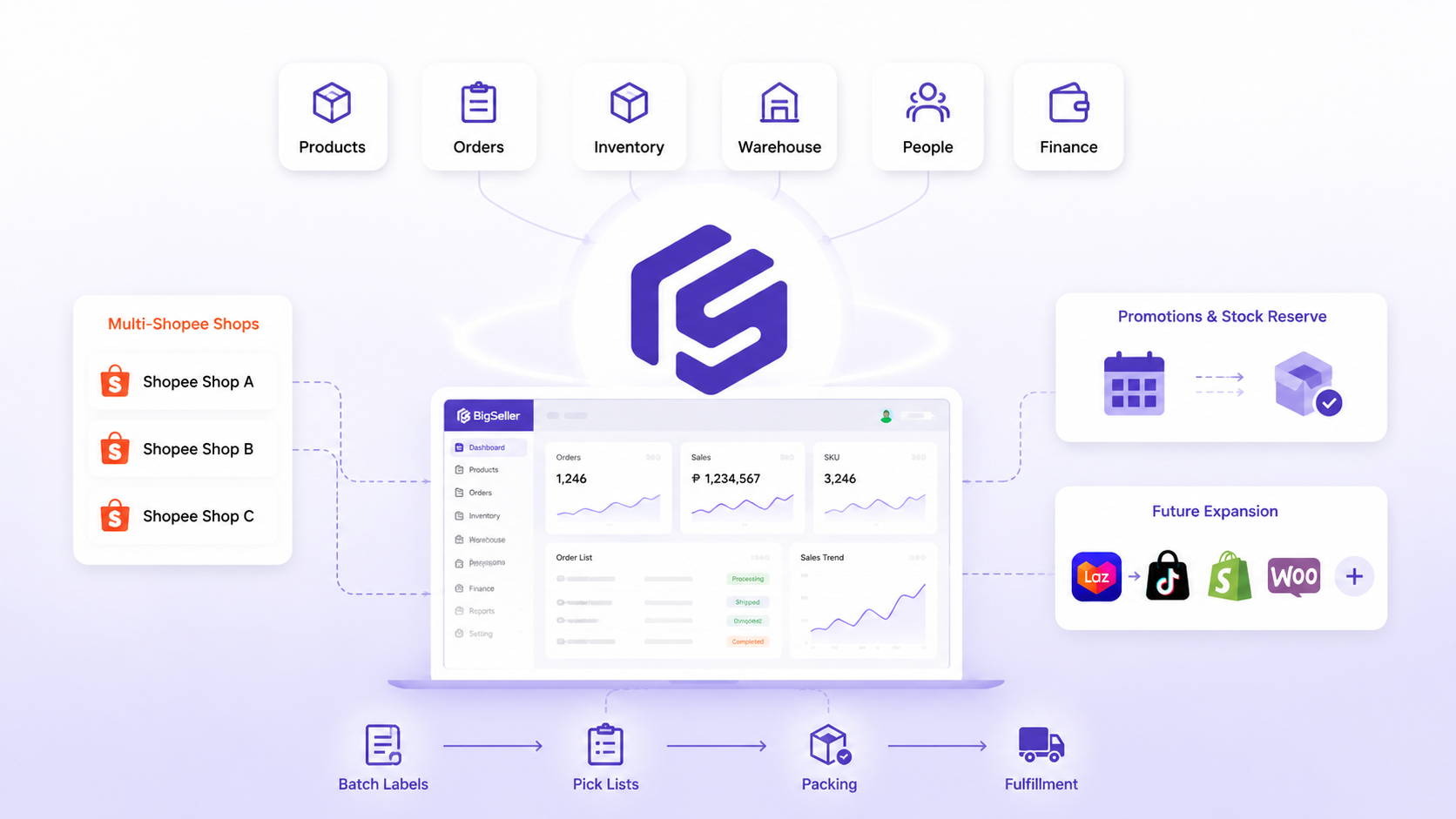
With BigSeller, Philippine sellers can manage products, orders, inventory, warehouses, people, and finance in one centralized system. For several Shopee shops, this gives the team a shared operational view instead of treating every account as a separate workflow.
Orders from connected stores can be processed in the same system, allowing the team to organize daily work without continually moving between shop dashboards. When the same products are sold through several shops, connected inventory and warehouse processes make it easier to base fulfillment decisions on the stock picture the business is actually managing.
The practical value becomes clearer during fulfillment. Instead of repeatedly preparing documents per shop, sellers can use batch-oriented workflows for labels, pick lists, and packing documents. Warehouse staff can then work from the order flow they need to complete, while managers retain visibility over the wider multi-store operation.
Promotions add another reason to centralize operations. Several Shopee shops may join different campaign periods while drawing from the same stock pool. BigSeller supports Shopee promotion sync and reserved inventory workflows that can help sellers prepare campaign stock more systematically. Actual use should still follow the seller's connected-shop setup and operating process.
BigSeller also supports future expansion to Lazada, TikTok Shop, Shopify, WooCommerce, or other channels. Centralizing core operational data early can make that next stage easier to manage.
Vist our website to know more 👉BigSeller ERP
5. When It Is Time to Move Beyond Spreadsheets
Key: The strongest signal is repeated cross-shop checking. If the team frequently asks which shop sold a SKU, whether stock is still available, which orders must be picked first, or how all shops performed this week, a multi-store ERP is worth evaluating.
The need can appear when two or more Shopee shops sell overlapping products, when several staff members update the same order or inventory information, or when a shared warehouse needs clearer picking and packing instructions. Regular campaign participation can also expose the limits of manual stock coordination.
For a small single-store business, adopting an ERP too early may add more process than necessary. For several shops, however, the operational burden often grows faster than the number of dashboards. The relevant question is whether the seller is still spending too much time connecting information manually.